








Some games reward fast reactions first. Others reward preparation. SAND: Raiders of Sophie appears to sit closer to the second group, where players benefit from understanding routes, loadouts, fuel, cargo, map locations, and the basic loop before they push too far.
Preparation is not the same as optimization. New players do not need a perfect route or a complete plan. They need enough context to avoid obvious mistakes. If a game asks players to manage movement, vehicles, extraction choices, or route knowledge, then even a simple checklist can make the early experience less confusing.
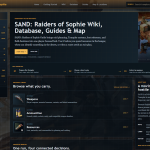
That is where a focused resource like SAND: Raiders of Sophie becomes helpful. A guide hub can collect beginner notes, wiki references, database entries, map routes, and live-game details in one place.
A practical preparation routine might start with three questions. First, what should be handled before leaving? Second, what route or area needs to be understood before committing? Third, what should be checked after a failed attempt? Those questions keep learning active.
For example, a failed route might not mean the player made one bad move. It could mean they misunderstood the map, skipped a preparation step, or did not know what the Trampler needed before the run. A compact guide helps separate those causes.
The best preparation guides leave room for improvisation. They explain enough to reduce friction, but they do not remove the tension of making decisions during play.
Preparation is not the same as optimization. New players do not need a perfect route or a complete plan. They need enough context to avoid obvious mistakes. If a game asks players to manage movement, vehicles, extraction choices, or route knowledge, then even a simple checklist can make the early experience less confusing.
That is where a focused resource like SAND: Raiders of Sophie becomes helpful. A guide hub can collect beginner notes, wiki references, database entries, map routes, and live-game details in one place.
A practical preparation routine might start with three questions. First, what should be handled before leaving? Second, what route or area needs to be understood before committing? Third, what should be checked after a failed attempt? Those questions keep learning active.
For example, a failed route might not mean the player made one bad move. It could mean they misunderstood the map, skipped a preparation step, or did not know what the Trampler needed before the run. A compact guide helps separate those causes.
The best preparation guides leave room for improvisation. They explain enough to reduce friction, but they do not remove the tension of making decisions during play.
